Heat-Proof Your Yard: Summer Landscape Tips for Limestone Soil
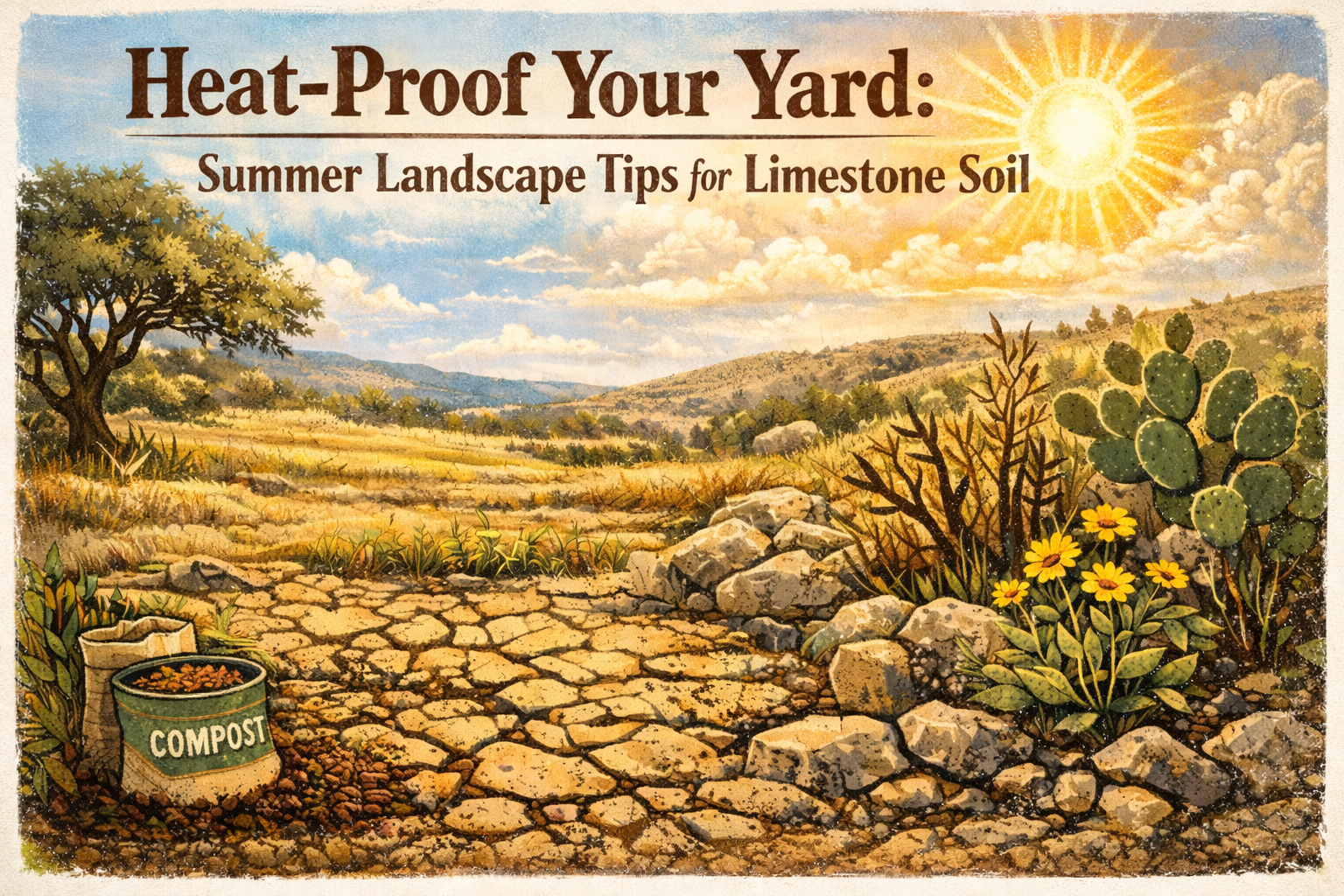
The first summer I decided to get serious about the yard out here, I did what most reasonably confident homeowners do right before being humbled by nature. I planted a few things, watered generously, stood back, and waited for appreciation.
What I got instead was indifference. Slow, sun-baked indifference.
By late June, the ground felt like a warm countertop. Water would hit the soil, pause for half a second, then disappear—running off, slipping into cracks, or evaporating almost instantly. When I finally dug a little deeper to see what was going on, I met the real decision-maker in the Texas Hill Country landscape: limestone.
Not the charming limestone you see stacked neatly in walls. The stubborn, chalky kind that sits just below a thin layer of topsoil and makes sure summer is a test you didn’t quite study for.
If you live here, you already know the pattern. Things look promising in spring. Then summer shows up with its full authority, and suddenly your yard looks like it’s reconsidering its life choices. The mistake most of us make is trying to fight the heat directly. The better approach is setting the yard up so it expects summer—and behaves accordingly.
The deal limestone soil makes with you
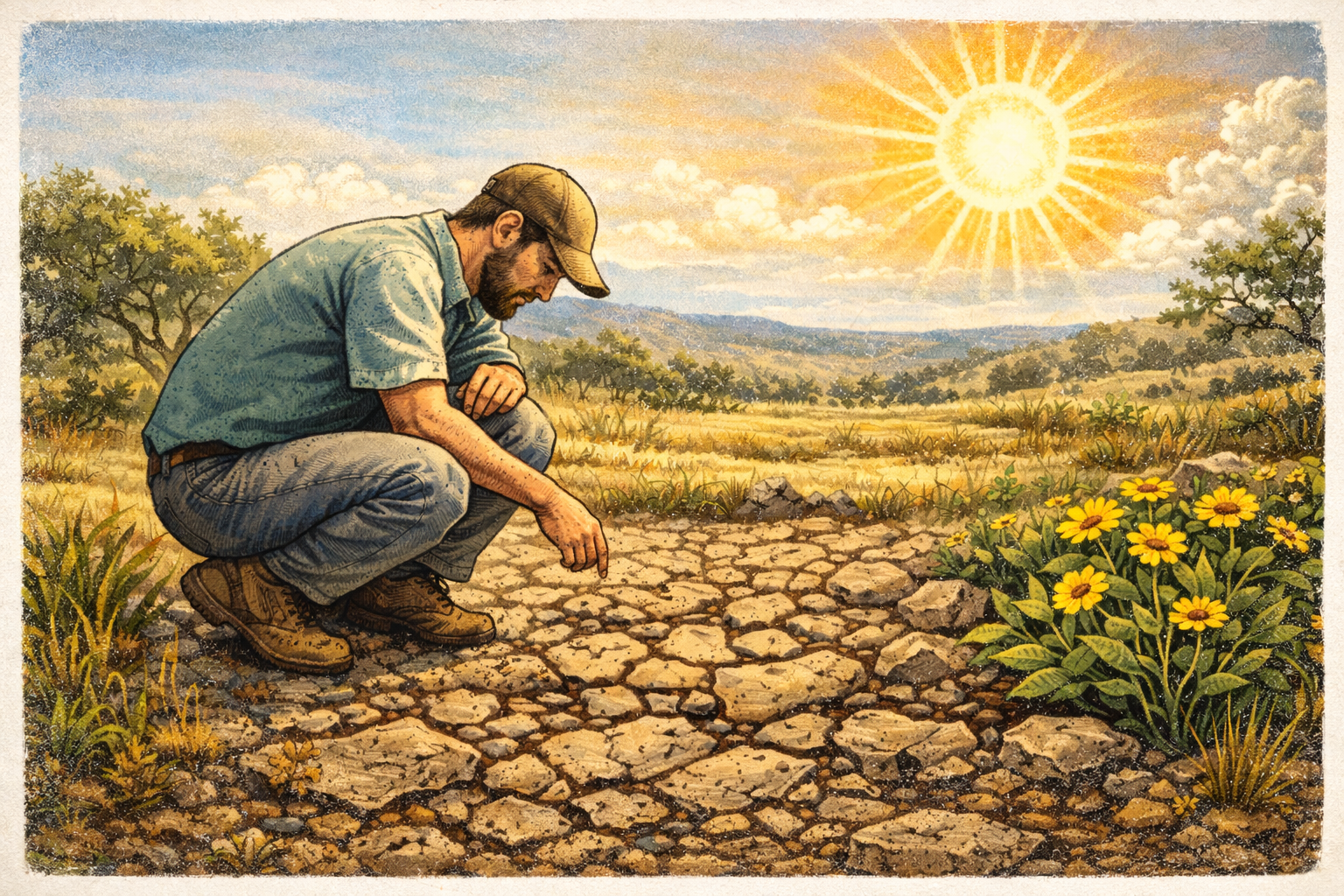
Limestone soils are typically alkaline. That sounds academic until you realize what it actually means: certain nutrients may be present in the soil but unavailable to plants. Iron is the classic example. Plants need it, but high pH locks it up, leading to that familiar yellow-leaf look with green veins that shows up just when the heat intensifies.
On top of that, Hill Country soils are shallow, low in organic matter, and quick to dry. Add wind and sun, and water becomes a short-term visitor rather than a resident. If your strategy is simply to water more, you’ll burn through time and money while your plants remain quietly stressed.
The goal isn’t more effort. It’s a different setup.
Bare soil is working against you
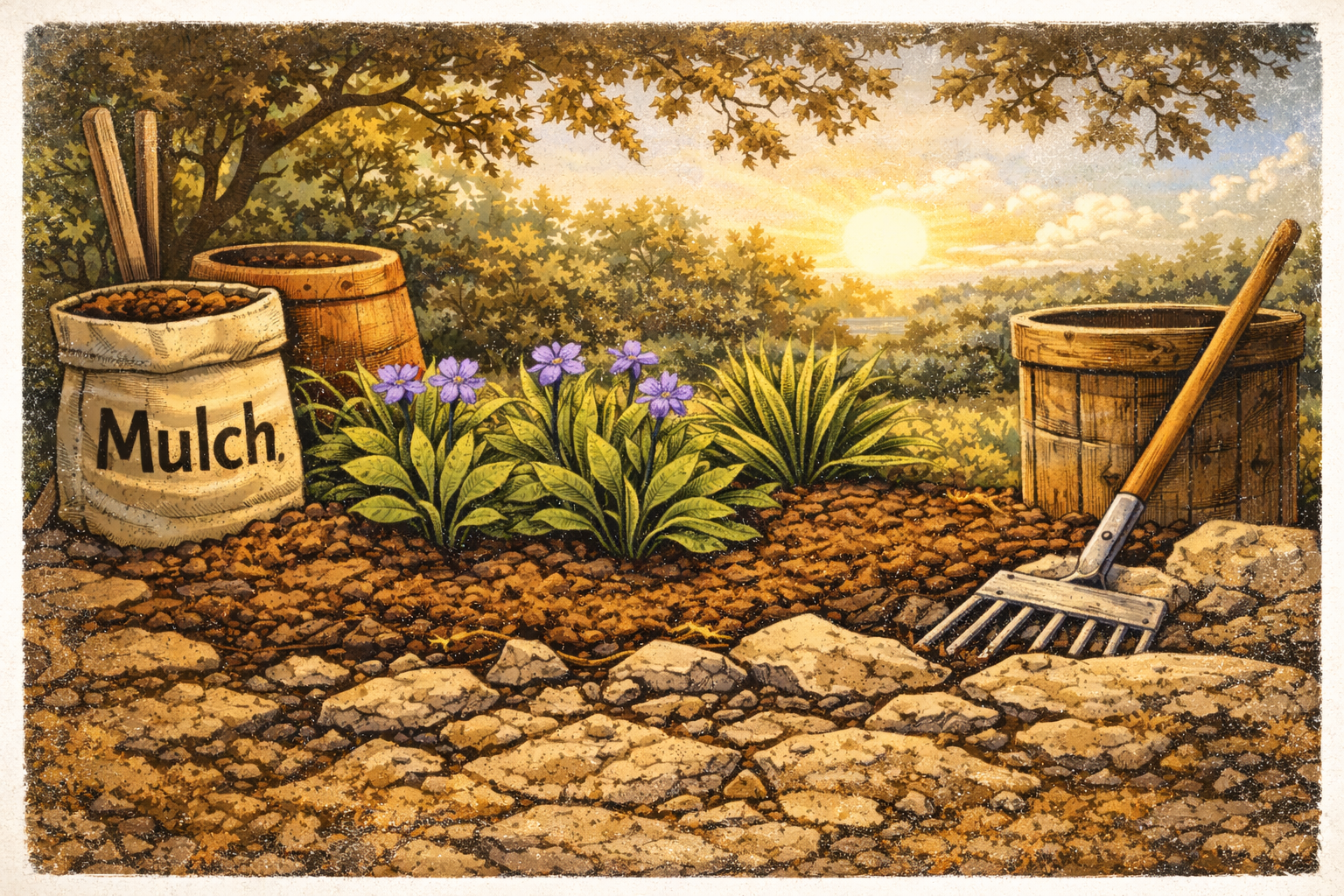
If there’s one thing summer teaches fast, it’s that exposed soil is a liability. Sun hits bare ground, ground heats up, moisture vanishes, and roots take the hit.
This is where mulch stops being decorative and starts being structural.
A real layer of organic mulch—wood chips, shredded bark, leaves—changes the physics of the soil. It shades the surface, reduces evaporation, moderates temperature swings, and keeps moisture where roots can actually use it. A light dusting won’t do much. A committed layer will.
Once I stopped thinking of mulch as a finishing touch and started thinking of it as insulation, things began to change.
Improving limestone soil is a long game
There’s no shortcut around this part. Limestone soil doesn’t respond to dramatic gestures. It responds to steady habits.
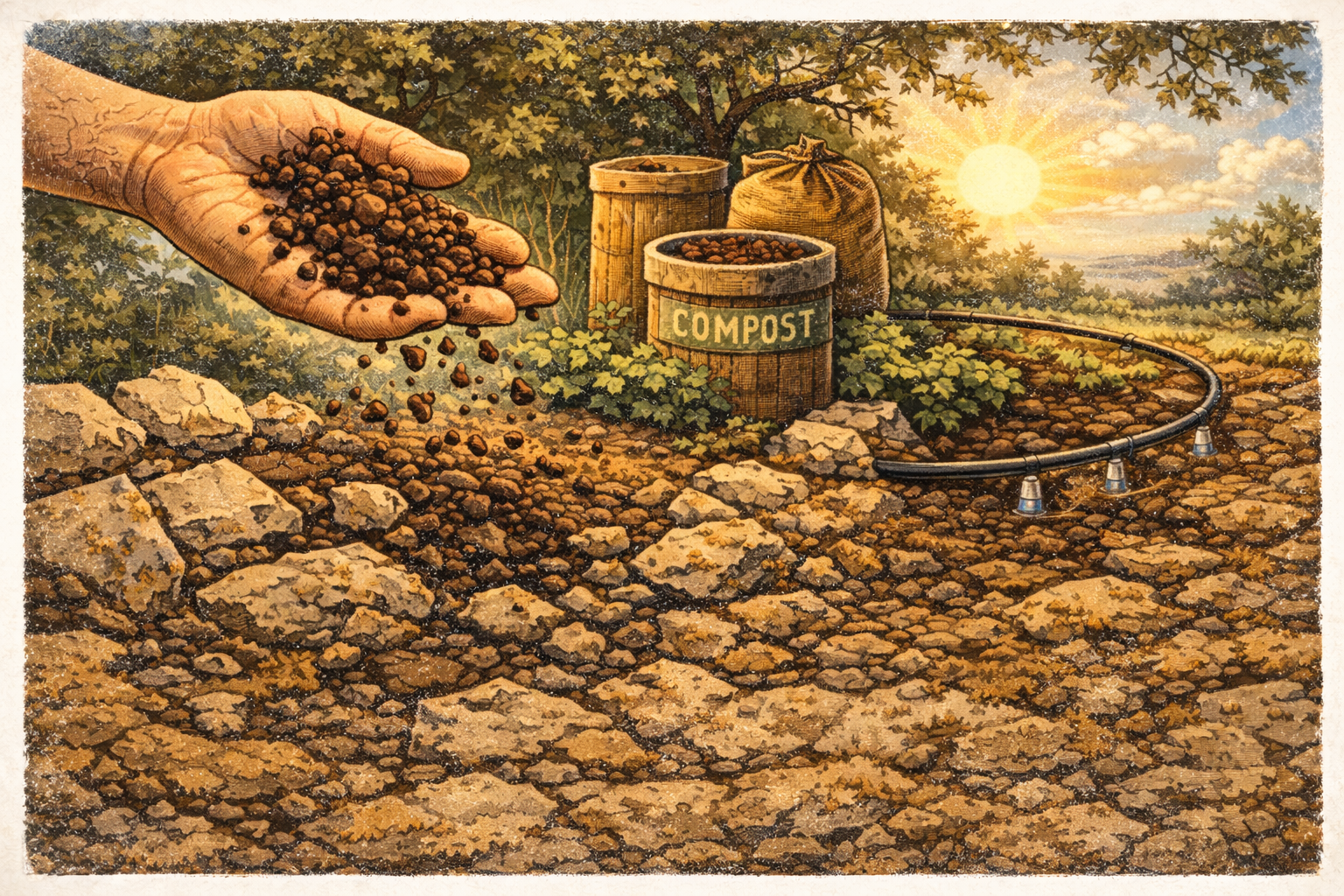
Organic matter is the key, but not in a dump-truck, fix-it-all way. Compost, decomposed mulch, shredded leaves—added gradually—create tiny pockets that hold air and water. Over time, the soil becomes more forgiving. Not perfect, but workable.
One thing that surprised me was learning that soils under trees often improve naturally over time. Leaves fall, roots grow, organic matter accumulates. Nature quietly does what we’re trying to do manually—just on a longer timeline.
The mistake is trying to turn limestone soil into potting mix. The win is making it just sponge-like enough to support roots through heat and dry spells.
Water like someone who’s lived here a while
Summer watering isn’t about keeping the surface damp. It’s about pushing moisture down.
Early morning watering gives plants time to absorb moisture before the heat peaks. Deep, infrequent watering encourages roots to grow downward instead of hovering near the surface. And concentrating water on trees, shrubs, and perennials pays bigger dividends than trying to keep every blade of grass perfect in August.
Once I switched to thinking of water as something to place rather than spray everywhere, the yard stopped looking perpetually exhausted. Drip irrigation under mulch, in particular, feels like discovering a cheat code.
Lawns have their place, but summer isn’t the season to bully them into perfection. It’s the season to keep them healthy enough to rebound.
Some plants are never going to love your soil
This part stings a little, especially when you have a picture in your head of what the yard should look like.
Some plants simply don’t like alkaline soils. You can fight that with treatments and amendments, or you can accept the chemistry and choose plants that already know how to live here. When iron deficiency shows up, it’s often a symptom of soil chemistry and stress, not a lack of fertilizer.
Improving the root environment—shade, mulch, moisture stability—often does more than chasing nutrients.
This is where landscaping gets easier: stop asking plants to adapt to your vision and start letting your vision adapt to the place.
Decide where to engineer and where to cooperate
Not every part of your yard needs the same treatment.
If you want vegetables or flowers that prefer richer soil, raised beds or mounded areas make sense. You create depth where the ground won’t give it to you. Meanwhile, the broader landscape can lean into native or well-adapted plants that don’t need constant intervention.
Once I separated “places I’ll engineer” from “places I’ll cooperate,” maintenance stopped feeling like a constant uphill push.
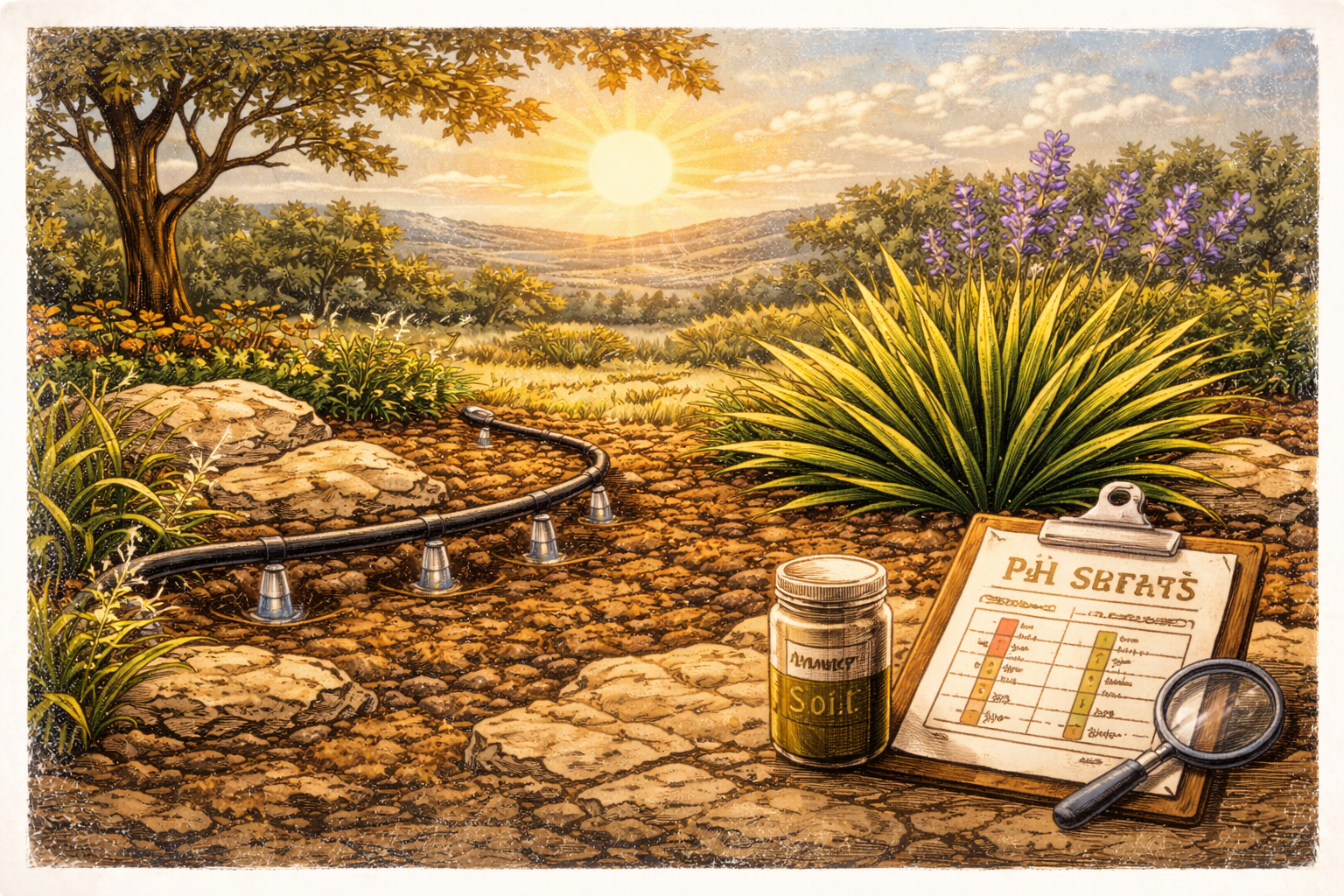
Guessing is optional
If you’ve been experimenting for years, a soil test can feel like admitting defeat. It isn’t. It’s simply choosing clarity over trial and error.
One test can explain months of frustration. It won’t change limestone into loam, but it will tell you what you’re actually dealing with—pH, nutrients, and what’s worth adjusting versus accepting.
The quiet shift that makes all the difference
Eventually, I stopped seeing the yard as something to conquer and started seeing it as a system.
Shade matters. Mulch matters. Soil cover matters. Water placement matters. Timing matters. Plant choice matters.
Limestone soil doesn’t disappear, but once you stop insisting it behave like someplace else, it becomes far more manageable. Summer still arrives with authority—but it stops feeling personal.
If you’re reading this while staring at a patch of scorched ground thinking you’ve made a mess of things, you’re in good company. The Hill Country teaches in public. The good news is it rewards people who learn, adjust, and keep going.