The Moment You Realize the Dream Isn’t Gone — It’s Just Possible Somewhere Else
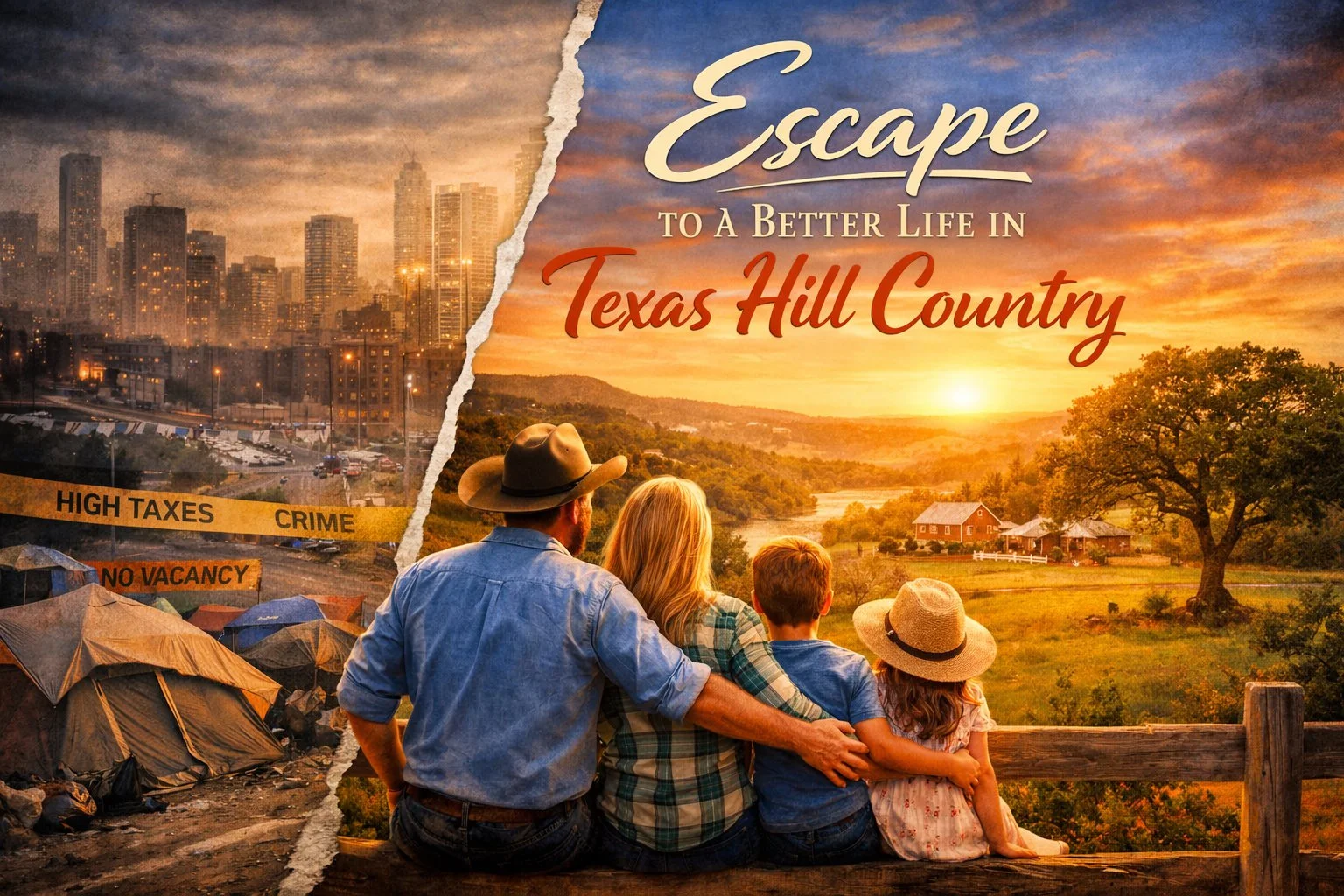
There’s a terrible, quiet moment so many of us know too well: you sit across a kitchen table — maybe your own, maybe one you almost had — and realize you’re paying more and getting less. More tax, less space. More noise, less safety. More compromise, less future. In California, that moment comes early and often. And it’s not just California: Oregon, Washington, New York, New Jersey, Colorado — you can almost set your clock by it.
It’s the moment the American Dream feels like a debt sentence.
You didn’t go into adulthood thinking: “I’ll have a mortgage that eats my paycheck,” or “I’ll have to leave my kid’s school because the neighborhood got rougher.” And yet here you are — priced out of decent homes, taxed to fund policies you don’t believe in, and defensive in every conversation about why you still live where you do.
But here’s the blunt truth many won’t tell you: you are not stuck. You haven’t failed. Your current zip code simply isn’t the only place the dream still exists — and for many, it never will be again.
And the data backs that gut feeling.
Homes Cost What Dreams Used to Cost
In California, housing isn’t just expensive — it’s unreachable for anyone who wasn’t born into money. The typical single-family home price in California hovers around twice the national average — about $680,000 — and that’s before you fight bidding wars, appraisal gaps, and punitive local policies that make building new supply nearly impossible.
In Texas — and especially here in the Hill Country just north of San Antonio — that same budget doesn’t just buy a home, it buys choice. Space. A yard. A place that feels like home, not a milestone you hope you’ll hit someday. Median values here aren’t in the stratosphere; they’re in reach.
Statistically, Texas housing is significantly more affordable — in some analyses, the overall cost of living clocks in about 16% lower than California’s. That’s not a rounding error — that’s a lifestyle you can build instead of just survive.
And yet — you shrug. You think, “But Texas has its issues too.” Yes. Every place does. But for most people fed up with spiraling costs, stagnant affordability, and the cultural friction in high-cost states, the trade-offs start to look a lot smaller — and the benefits a lot bigger.
Taxes: Pay More, Get Less?
Let’s talk money the way adults do.
California taxes you at every turn: high state income tax, high sales tax, regulatory fees, higher gas taxes, and more government spending per resident than almost any other state.
Texas doesn’t have a state income tax — a fact that overwhelmingly benefits working families, dual-income households, and anyone planning retirement.
Yes, property taxes are higher. Yes, sales taxes aren’t minimal. But for someone earning a California income and living in Texas, the net effect is often a deeper paycheck, a bigger home, and more control over where your dollars go instead of surrendering them to state coffers.
Public Safety & Education — The Stakes Aren’t Abstract
You’re not just paying more for housing — you’re paying more for anxiety, uncertainty, and cultural conflict.
National analyses that evaluate affordability, safety, education, and overall quality of life consistently rank California near the bottom of states to raise a family.
Texas doesn’t always top those lists — and it shouldn’t be mythologized — but many Texas Hill Country communities absolutely deliver the things the big coastal metros sell you in ads but don’t actually achieve:
Neighborhoods where kids can ride bikes to school.
Commutes that don’t chew up your day.
Outdoor spaces that aren’t gated off or overpriced.
A sense of community that isn’t defined by ideology or division.
Your children don’t just need a house — they need a place that gives them space to grow without fear being a constant backdrop.
They Left. And Most Never Looked Back.
Real migration patterns tell you something honest: California is losing residents in droves — hundreds of thousands annually — with Texas among the top destinations.
And no — this isn’t some fringe commentary. It’s you, your friends, your neighbors — people with degrees, careers, families, and potential — choosing less tax, more space, more opportunity over small wins and slow burnout.
Most people who make the move don’t regret arriving — they regret waiting. Waiting because they felt loyal. Waiting because they thought the grass couldn’t be greener. Waiting because leaving the familiar — even if suffocating — feels wrong until it feels like home.
Hill Country Isn’t a Myth — It’s a Real Option
If you’ve read this blog or spoken with me before, you know what we see every day:
Boerne, Fair Oaks Ranch, Kerrville, and the communities dotting San Antonio’s northern horizon aren’t absentee vacation towns. These are real neighborhoods with local businesses, respected schools, and families building their lives. Yes, prices have risen — desirable places attract demand — but they’re still fundamentally accessible compared to the coastal alternatives.
And they offer something the big urban sprawls now arguably can’t: a life that feels earned, not endured.
Final Thought — This Isn’t Escape. It’s Choice.
You aren’t running away — you’re choosing forward. You’re choosing a cost of living that lets you keep more of what you earn. You’re choosing neighborhoods where meaning outweighs marginal tax brackets. You’re choosing schools that feel like part of the community, not an afterthought.
You don’t have to accept that the dream is dead. It’s just alive in different zip codes — and for many Californians and residents of other high-cost states, Texas Hill Country is where that life finally feels real.
The only regret most people have isn’t that they moved — it’s that they didn’t move sooner.
Frequently Asked Questions
Is Texas really more affordable than California?
For most families, yes—especially on housing. California home prices are dramatically higher than Texas in most metro comparisons, and that price gap tends to overwhelm differences in other costs like property taxes. The result is that many households can buy a larger home, in a safer neighborhood, with more financial breathing room in Texas than they could reasonably manage in many California markets.
If Texas has higher property taxes, does it cancel out the savings?
Not usually. Texas property tax rates can be higher, but the taxable home values are often far lower than comparable homes in California. Many households also benefit from Texas having no state income tax, which can increase take-home pay. The true comparison is the full monthly picture: housing payment, taxes, insurance, commuting, and overall cost of living.
Why are so many people moving from California to Texas?
The most common drivers are housing affordability, taxes, job growth, and quality-of-life factors like space, commute time, and the ability to live in a neighborhood that feels safe and family-friendly. Texas—especially the San Antonio region—has become a frequent destination because it offers major-metro amenities without coastal-market housing prices.
What makes the Texas Hill Country outside San Antonio different from “moving to Texas” in general?
Texas is big and not every area delivers the same lifestyle. The Hill Country north of San Antonio—places like Boerne and Fair Oaks Ranch—tends to appeal to families who want community feel, good schools, and Hill Country scenery while staying within reach of San Antonio’s jobs, airport, and medical infrastructure.
Are Boerne and Fair Oaks Ranch good places to raise a family?
They’re popular with families for a reason: they offer a suburban Hill Country lifestyle, strong community identity, and access to reputable schools and youth activities. Like anywhere, the “right” fit depends on priorities, commute needs, budget, and the specific neighborhood—but these areas are consistently on relocation shortlists for buyers leaving high-cost states.
How far is the Texas Hill Country from San Antonio’s jobs and amenities?
Many Hill Country communities sit within a practical commute to major employment centers and everyday amenities like shopping, dining, healthcare, and the San Antonio International Airport. Exact commute times vary by neighborhood and time of day, so it’s smart to evaluate homes with a real “weekday commute” test, not just map estimates.
Do I need to live in Austin to get a strong Texas economy and lifestyle?
Not necessarily. Austin is thriving, but it’s also become far more expensive. The San Antonio region often offers a better balance of affordability, housing inventory, and lifestyle—especially for families focused on space, schools, and a less frantic cost structure.
What should I know before relocating to the Texas Hill Country?
The Hill Country has its own realities: summer heat, water considerations, limestone soils, and different insurance and property-tax dynamics than many out-of-state buyers expect. None of these are deal-breakers, but they’re worth understanding early so you make a smart, eyes-open decision.
Is it better to rent first or buy right away after moving?
It depends on timing, job certainty, and how confident you are about neighborhoods and commute patterns. Some families rent briefly to learn the area; others buy quickly because their current market’s equity or timing makes it practical. The right answer is the one that fits your risk tolerance and the local market conditions when you move.
What’s the first step if I’m considering a move from California to Texas?
Start by getting clear on your “non-negotiables” (schools, commute, budget, safety, home size, yard space), then compare what those requirements buy in your current area versus targeted Hill Country communities. A focused relocation plan beats endless browsing—and prevents expensive mistakes.