Hill Country Gardening: Learning to Grow Where the Rock Is in Charge
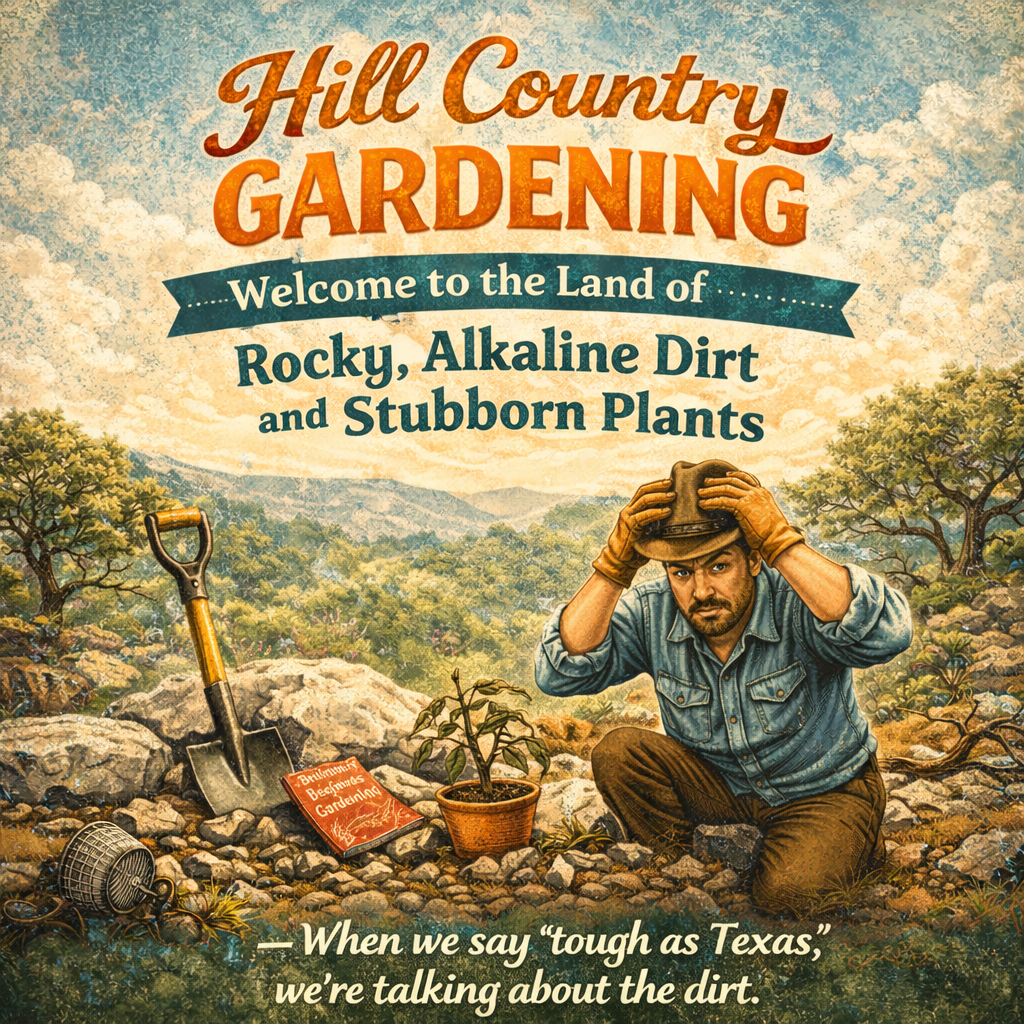
If you’re new to Boerne or Fair Oaks Ranch and decided to try your hand at gardening, there’s a moment you almost certainly remember.
You picked a sunny spot. Grabbed a shovel. Started digging.
Then—clang.
That sound wasn’t your imagination. It was limestone. And it was your official welcome to Hill Country gardening.
This part of Texas doesn’t ease you into things. The land makes its expectations clear early on. Gardening here isn’t about deep, forgiving soil and endless options. It’s about learning what works, what doesn’t, and how to stop fighting the ground beneath your feet.
Once you do, something interesting happens. Gardening gets simpler. And oddly enough, more satisfying.
A Lesson I Learned the Hard Way
When my wife and I first moved here, I did what I’d always done everywhere else I’d lived: I decided to plant fruit trees.
I laid out the spacing. Picked varieties. Grabbed a shovel.
That plan lasted about ten minutes.

What I learned—quickly—is that you don’t dig holes in the Hill Country. You chip the rock away to make them. What I thought would be an afternoon project turned into a slow education in limestone, patience, and humility.
That experience taught me something important: success here starts with accepting the conditions instead of trying to overpower them.
Why the Land Looks the Way It Does
The rolling terrain that makes the Hill Country beautiful also determines how plants survive here.
Upper slopes are hot, dry, and rocky. Mid-slopes tend to be more forgiving. Lower areas collect soil and moisture, sometimes too much of it.
That’s not a design flaw. It’s the system working as intended.
The mistake many newcomers make is treating every part of the yard the same. The gardeners who succeed learn to match plants to place.
Nature Already Figured This Out
One of the best ways to understand Hill Country gardening is to look around at what’s already thriving.
Live oaks don’t send roots straight down—they spread them sideways through cracks in the rock. Ashe juniper survives brutal summers not because it’s stubborn, but because it’s perfectly adapted to thin soil and long dry spells. Native grasses green up fast after rain and then ride out drought without complaint.
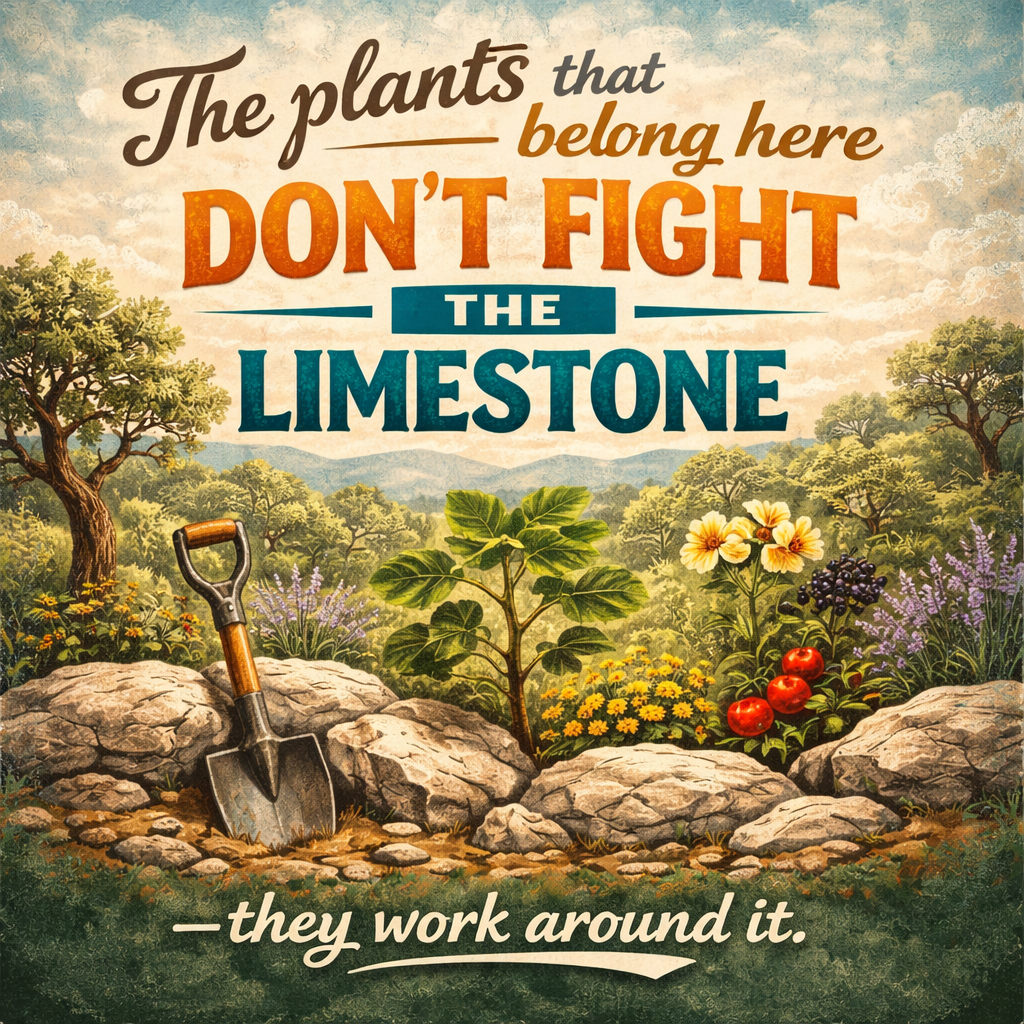
The plants that belong here don’t fight the limestone. They work around it.
What Actually Grows Well Here
This is the part most people want spelled out plainly.
Native trees that thrive with little help
These trees are well suited to limestone soil, heat, and drought:
Live oak
Texas red oak
Cedar elm
Texas persimmon
Ashe juniper
Once established, these trees are remarkably low-maintenance.
Fruit trees that do well with proper preparation
Fruit trees can succeed here if planted thoughtfully:
Fig
Pomegranate
Peach (on the right rootstock)
Plum
Pear (especially fire-blight-resistant varieties)
Raised or mounded planting areas and good drainage matter more than variety hype.
Vegetables that handle heat and alkaline soil
Some vegetables are simply better suited to Hill Country conditions:
Okra
Peppers (jalapeño, serrano, poblano)
Eggplant
Swiss chard
Sweet potatoes
Tomatoes can grow here too, but timing, mulch, and afternoon shade make all the difference.
Herbs and flowers that feel at home
Herbs are often the easiest win for new gardeners:
Rosemary
Thyme
Oregano
Sage
Basil (with some summer shade)
Flowers that tolerate limestone and heat include:
Black-eyed Susan
Mexican hat
Coreopsis
Native salvias
Lantana
Why Gardening Here Frustrates Newcomers
Most frustration comes from trying to garden in the Hill Country as if it were somewhere else.
Deep digging doesn’t work. Fertilizer doesn’t always solve yellow leaves. Overwatering can do more harm than good. Heavy imported soil can trap water and rot roots.
None of this means gardening here is hard. It just means it’s different.
Working With the Land Pays Off
Raised beds are one of the best tools Hill Country gardeners have. They give you control over depth, drainage, and soil quality without fighting the rock.
Mulch matters more here than many people realize. A steady layer moderates soil temperature, slows evaporation, and gradually builds real soil where plants need it.
Above all, plant selection matters. Some plants will always struggle here. Others will surprise you with how tough and productive they can be.
A Hill Country Way of Gardening
Gardening in Boerne and Fair Oaks Ranch mirrors life here in general.
It rewards people who pay attention. Who adapt. Who learn when to push and when to step back.
You stop expecting perfection. You start appreciating resilience. And over time, your garden begins to reflect the place itself—rugged, practical, a little stubborn, and deeply satisfying.
Everyone learns the limestone lesson eventually. Once you do, gardening stops feeling like a fight and starts feeling like one more reason this place feels like home.