Texas Home Buyer Closing Costs: What You’ll Really Pay (and Why It Matters)
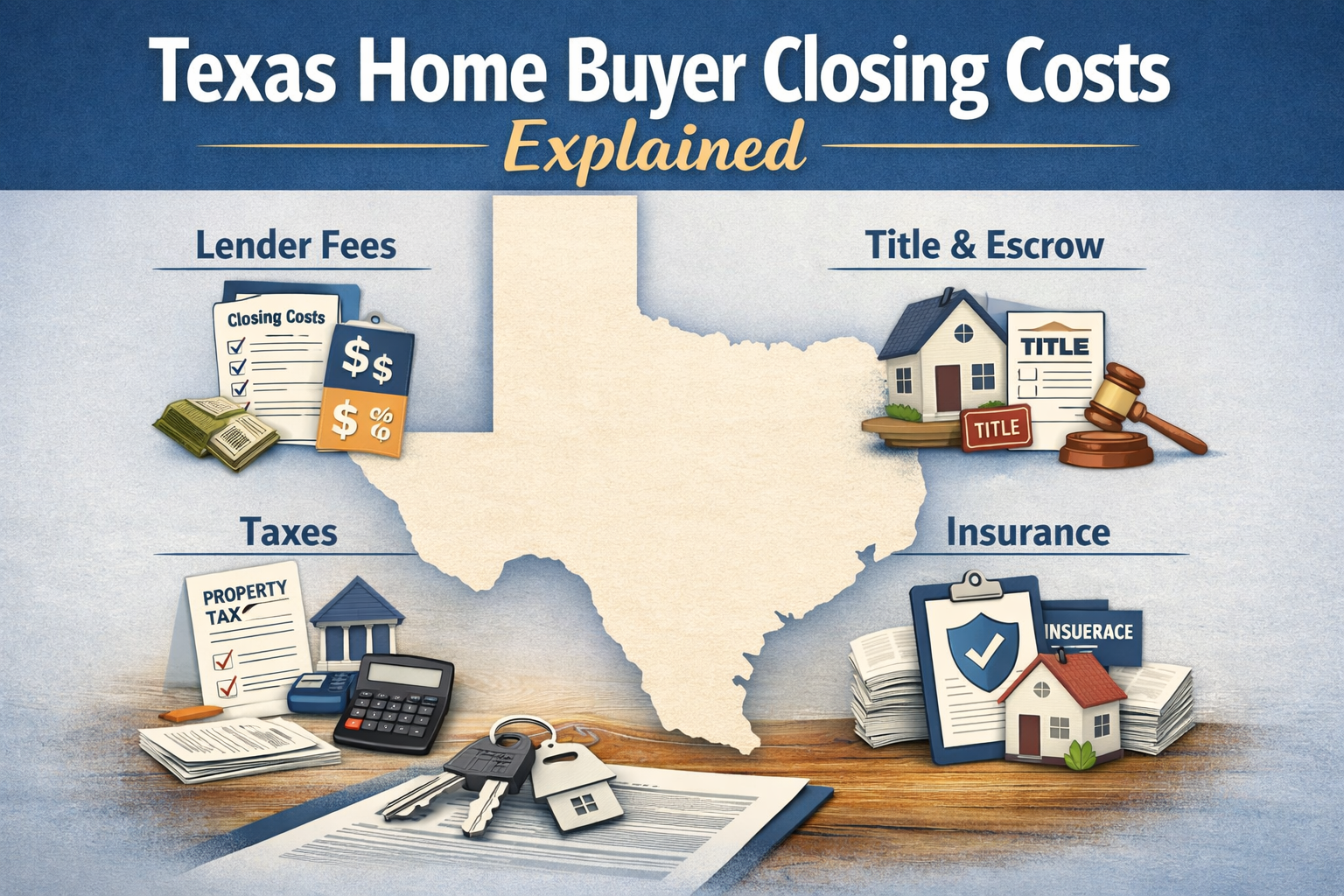
Buying a home in Texas is often a financial upgrade compared to states like California, Washington, or New York. Lower home prices, no state income tax, and generally lower insurance costs all work in your favor.
But there’s one area that still catches buyers off guard: closing costs.
My goal with this post is simple—to give you a clear, plain-English, Texas-specific breakdown of what home buyers actually pay at closing, why those costs exist, and which ones you can influence. No sales pitch. No vague percentages. Just the facts, with context.
The Big Picture: What Are “Closing Costs” in Texas?
Closing costs are the one-time expenses required to finalize a real estate purchase. In Texas, they typically fall into five buckets:
Lender fees
Title company & escrow costs
County recording fees
Prepaid items (insurance & interest)
Initial escrow funding (mainly property taxes)
For most financed purchases in Texas, buyers should plan on 2.5%–3.5% of the purchase price, excluding the down payment. Rate buydowns or jumbo loans can push that higher.
1. Lender Fees (What the Bank Charges)
These are fees tied directly to originating and underwriting your mortgage.
| Fee | Typical Texas Range | |||||||||||||||||||||||||||||||||||||||||||||||||||||||||
|---|---|---|---|---|---|---|---|---|---|---|---|---|---|---|---|---|---|---|---|---|---|---|---|---|---|---|---|---|---|---|---|---|---|---|---|---|---|---|---|---|---|---|---|---|---|---|---|---|---|---|---|---|---|---|---|---|---|---|
| Loan origination fee | $0 – 1.0% of loan amount | |||||||||||||||||||||||||||||||||||||||||||||||||||||||||
| Discount points (optional) | 0 – 3% of loan amount | |||||||||||||||||||||||||||||||||||||||||||||||||||||||||
| Processing / administration | $400 – $900 | |||||||||||||||||||||||||||||||||||||||||||||||||||||||||
|
Some lenders bundle these fees into a single line item, others itemize aggressively. Multiple “admin” fees should always prompt questions. 2. Lender-Required Third-Party FeesThese aren’t paid to the lender, but they’re required by the lender.
3. Title Insurance & Title Company Fees (Texas-Specific)Texas is a title-company state, and title costs are more prominent here than in many other states. Title Insurance (Rates Are State-Regulated)
Important:
Title Company / Escrow Fees
4. County & Government Fees (A Texas Advantage)Texas does not charge a state real estate transfer tax.
5. Surveys, Inspections & Due DiligenceSurveys are more common in Texas than many buyers expect.
6. Prepaids & Escrow Funding (Biggest Cash-to-Close Variable)These aren’t fees—but they require cash at closing.
This is where most surprises happen, particularly for out-of-state buyers unfamiliar with Texas property taxes. Final Perspective: What This Looks Like on a $500,000 Texas HomeAbstract percentages don’t help most buyers. Real numbers do. So here’s what a typical, financed $500,000 home purchase in Texas often looks like at the closing table. This assumes a conventional loan, no aggressive rate buydown, and a standard owner-occupied transaction. A realistic closing cost snapshot
Total typical buyer closing costs:~$14,000 – $23,000 Why the range is wide — and why that’s normalTwo buyers can purchase identical $500,000 homes and still have materially different cash-to-close numbers. The biggest swing factors are:
None of these are red flags. They’re simply mechanics. The takeaway most buyers missThe mistake isn’t the amount of closing costs. Well-prepared buyers don’t panic at closing. They:
That’s how closings stay boring — which is exactly how they should be. Previous
Previous
Hill Country Gardening: Learning to Grow Where the Rock Is in ChargeNext
Next
Texas Home Sellers: Why “After Closing” Is When Lawsuits Actually Begin |