Things You Learn the Hard Way After Planting Trees in the Hill Country
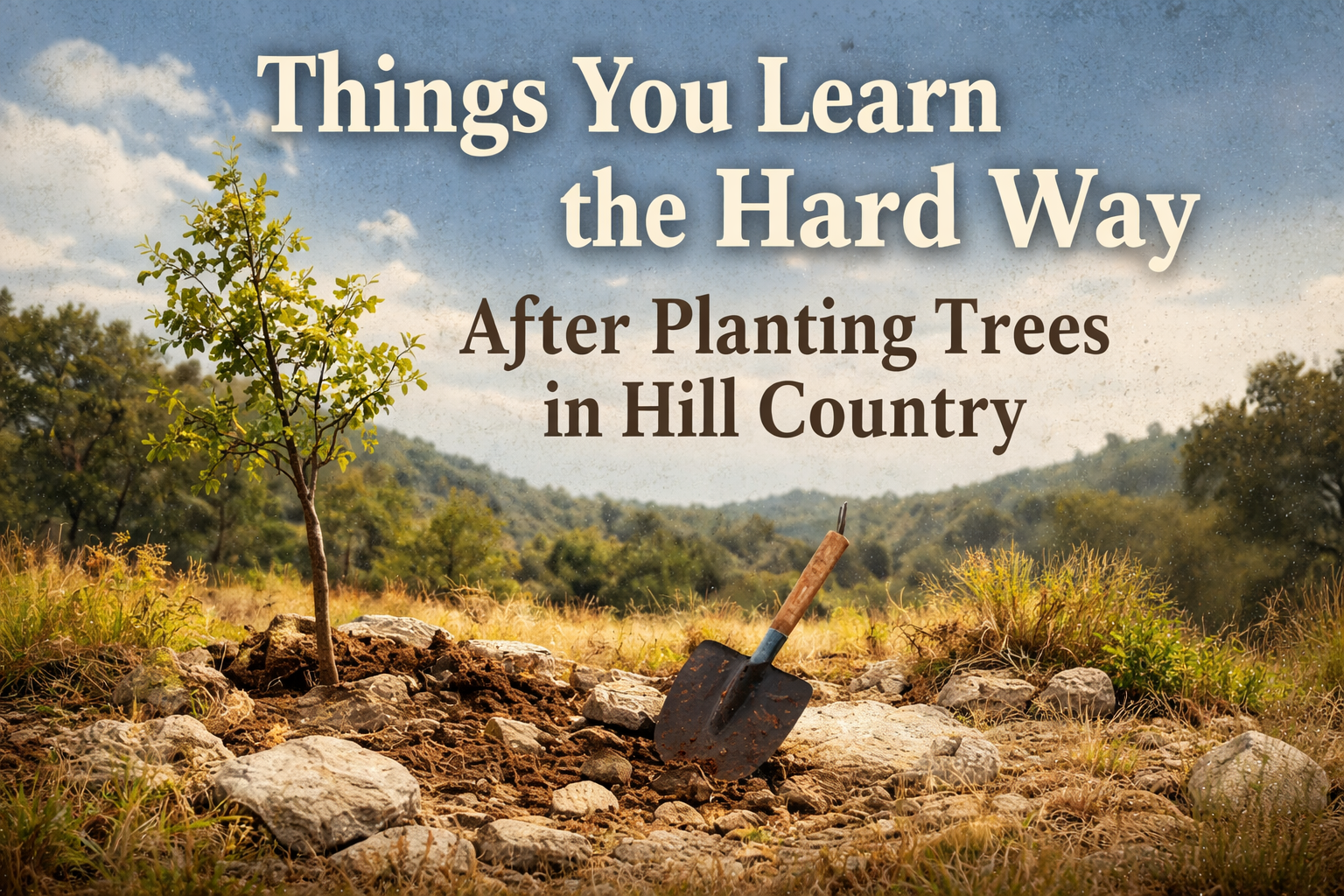
When we moved here, I assumed planting a tree was… planting a tree.
Dig a hole. Drop it in. Water. Admire. Move on.
That illusion lasted about 12 minutes.
Here’s what Hill Country soil taught me—mostly the hard way.
1. You don’t dig holes here. You negotiate with rock.
That innocent shovel hits limestone fast. Sometimes at 4 inches. Sometimes at 6. Rarely where you want it. You can’t muscle your way through Hill Country soil. You adapt or you lose.
2. The hole matters more than the tree.
A great tree in a bad hole fails quietly. Roots need width more than depth, drainage more than fluff, and space to escape the nursery soil they arrived in.
3. Store‑bought soil alone is a lie.
It looks rich. It feels promising. But if it sits like a sponge on top of rock, roots drown or rot. Mixing native soil back in—unpopular but necessary—makes all the difference.
4. Some trees fake success.
They leaf out. They look fine for a year. Sometimes two. Then one summer later they simply… quit. The problem was underground all along.
5. Watering too much is easier than watering right.
Runoff doesn’t mean saturation. It often means the water never reached the roots at all.
6. Mulch isn’t decoration—it’s survival.
Proper depth regulates temperature, retains moisture, and slowly improves the soil. Too little is useless. Too much smothers.
What finally worked:
Wider holes. Fewer trees. Better placement. Less fighting nature. More listening.
What’s the tree you’ve had the worst luck with out here?