Texas Hill Country Plants That Surprised Me (Good and Bad)
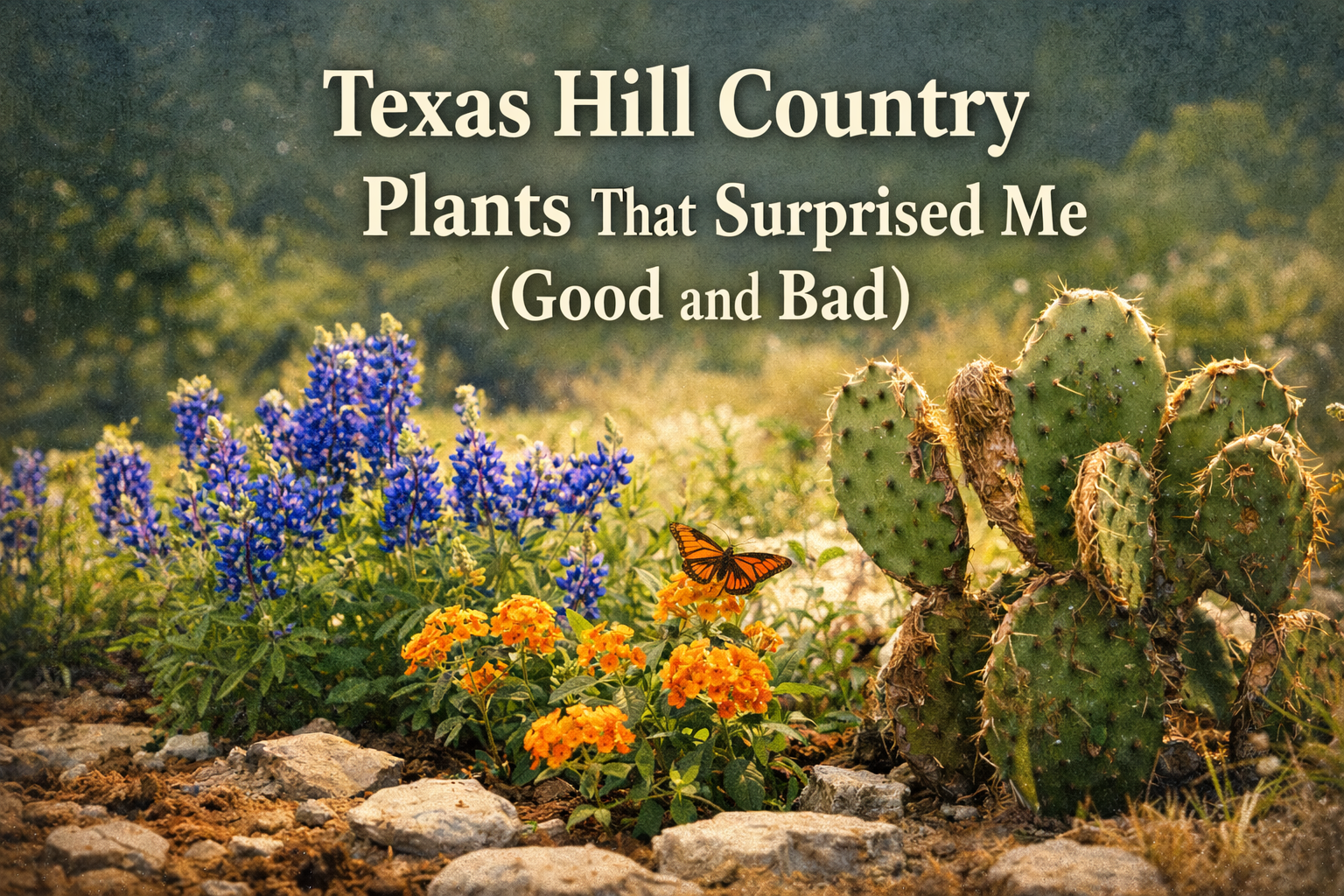
When we moved here, I did what most people do: I went to the nursery, read the tags, and assumed the tags were written by people who actually live on limestone.
Turns out the tags are… optimistic.
Over a few seasons, I noticed the same pattern again and again: plants that do well here aren’t necessarily “prettier” or “more expensive.” They’re the ones that tolerate thin soil, alkaline conditions, irregular drainage, and long stretches of heat without falling apart.
The “Good” surprises (plants that earned their keep)
These are the ones that surprised me by either thriving or at least staying reliable with normal homeowner-level care.
Lantana (especially the tougher varieties): Once established, it’s almost annoyingly unfazed by heat. It’s also one of the few things deer tend to ignore most of the time. Not always. But often enough to matter.
Autumn sage (Salvia greggii): This one behaves like it belongs here because it does. Handles heat, does fine in rocky beds, and tends to bounce back even after rough weather.
Texas sage / cenizo (Leucophyllum frutescens): It’s practically built for this environment. If you have a hot, brutal spot you’ve “failed” in multiple times, this is one of the first things I’d try.
Rosemary: I expected it to struggle, but in the right spot (sun, drainage) it can be surprisingly tough. The trick is not babying it with too much water.
Red yucca (Hesperaloe parviflora): This is one of the best “I give up on this area” plants I’ve found. Looks good, takes heat, doesn’t demand much.
Prickly pear / native cactus: Not for everyone aesthetically, but if you want proof that the soil isn’t the boss, cactus will gladly demonstrate.
Esperanza (yellow bells): Fast growth, loves sun, handles heat. In some yards it performs like a perennial; in others it acts like it needs a restart after hard cold. Still, it punches above its weight.
What surprised me about the winners is that many of them don’t look “impressive” right after planting. They’re playing a long game underground. Then, one day, they’re just… established.
The “Bad” surprises (plants that disappointed despite promises)
These aren’t “bad plants.” They’re just often the wrong tool for this particular job unless you have the right microclimate and patience.
Hydrangeas: If you have deep soil, shade, and consistent moisture, maybe. In a lot of Hill Country yards, they look okay for a while and then become a summer stress experiment you didn’t sign up for.
Azaleas: Same story. Acid-loving plants and alkaline limestone soil are not natural friends. You can force it with soil amendments and microclimates, but it’s not an easy relationship.
Ferns / impatiens / most tender shade ornamentals: If they need consistently cool, consistently moist soil, they’re asking for conditions many of us just don’t have.
Roses: Deer treat them like a salad bar in many neighborhoods. Even when the plant itself is tough, the deer don’t care.
Boxwood and “foundation shrubs from back east”: Some survive, but many look permanently annoyed by the combination of heat + reflected sun + limestone.
St. Augustine in full sun (lawn adjacent, but it counts): In shade it can work. In sun, it often demands more water than a lot of people want to feed it here.
The real lesson I learned
The Hill Country isn’t one set of conditions. It’s a patchwork of microclimates.
One side of a house can be shaded and damp. The other can be an oven. Two planting beds ten feet apart can have completely different soil depth. That’s why neighbors swear by totally different plants.
If I could go back and do it smarter, I’d do this:
Plant fewer things at first
Watch how water moves after rain
Put the toughest plants in the worst spots as “test pilots”
Save the “high-maintenance favorites” for proven microclimates
What plant has been your biggest pleasant surprise here, and what plant was a complete waste of money?