Quiet Signs You’re Actually Doing Something Right With Your Yard
Most of the time in the Hill Country, success isn’t obvious. It’s subtle.
It shows up less like “wow, perfect yard” and more like “huh, this is getting easier.”
Here are the quiet signs I’ve learned to watch for that usually mean you’re moving in the right direction.
Sign #1: Water starts soaking in instead of running off
This is a big one.
When your soil begins to improve (often through mulch, organic matter, and time), you’ll notice:
less puddling
less water sheeting downhill
better absorption around beds
It doesn’t mean you magically changed limestone into loam. It means you improved the thin layer you can influence.
Sign #2: Plants stop needing constant attention
Early on, everything feels like it needs intervention.
Then you notice:
you’re watering less often
plants bounce back faster after heat
you’re not constantly replacing things
That usually means roots have established and your placement choices were decent.
Sign #3: Volunteers start showing up
When you start seeing self-seeded plants, it’s a quiet vote of confidence from your yard.
Even simple volunteers in the right places can mean the soil biology is improving and conditions are stabilizing.
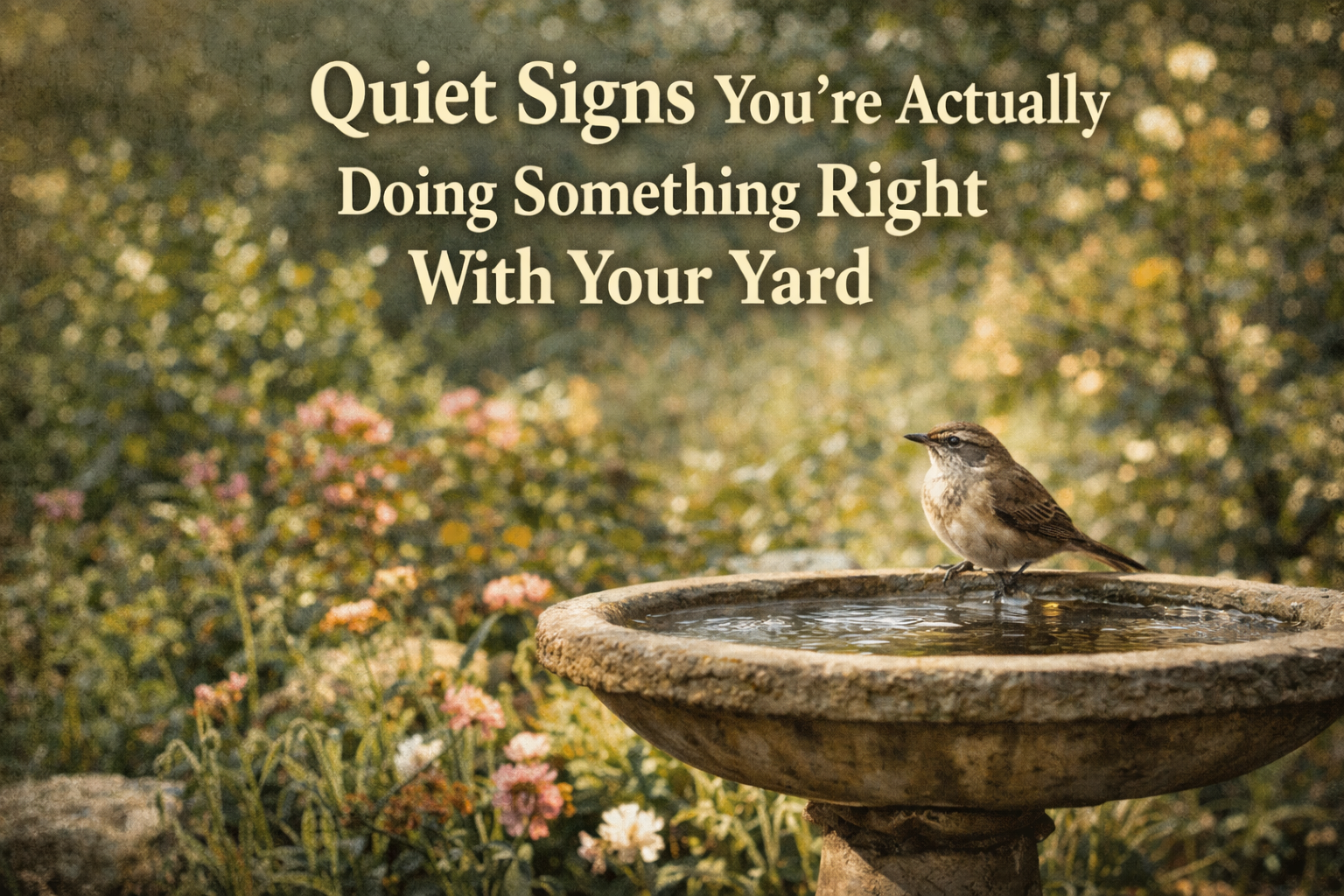
Sign #4: Birds become regulars, not tourists
If you see birds occasionally, that’s normal.
If you start seeing them routinely — especially around birdbaths, shrubs, seed sources, and protected cover — it usually means your yard is becoming a better habitat.
It’s one of the best “scoreboards” you can get without trying.
Sign #5: You do less, and things still improve
This is the most Hill Country sign of all.
When you stop forcing uniformity and start cooperating with the terrain:
fewer things die
you waste less money
your yard starts to look more “settled in”
That’s not laziness. That’s learning.
What’s one quiet win you’ve noticed recently that would have surprised you when you first moved here?